Sports News Without the Noise: A Smarter Fan Guide
May 26, 2026 · 13 min read

TL;DR — The Bottom Line
Sports news without the noise means concise, contextual, mobile-first coverage that strips out hot takes, clickbait, and repetitive debate-show filler. Press Sports delivers signal-only updates — scores, key stats, and short explainers — so busy fans get the story in under two minutes. The future of sports media belongs to brands that respect attention, separate news from opinion, and let fans follow teams and storylines, not firehoses.
If you've ever opened a sports app at lunch hoping for a quick read on last night's game and instead found yourself buried under autoplay debate clips, three near-identical recaps, and a rumor headline that turned out to be nothing, you already understand the problem. The modern fan doesn't lack information — they're drowning in it. That's exactly why sports news without the noise has become the defining promise of the next generation of sports media, and why Press Sports has built its entire editorial philosophy around it.
This guide breaks down what "noise" actually means in sports coverage today, how consumption habits have shifted, what a signal-only newsroom looks like in practice, and how you can build a media diet that respects your time without sacrificing depth. Whether you follow one team or fifteen, the principles below will change how you experience the sports day.
Quick Facts
- Average mobile sports session: Under 90 seconds per visit
- Preferred clip length (Gen Z fans): 10–30 seconds for highlights, 30–90 seconds for explainers
- Top noise complaints: Debate shows, clickbait headlines, redundant recaps
- Fastest-growing format: Short-form vertical video and structured news cards
- Press Sports promise: Game story, key stat, and standings impact in under 2 minutes
Why Sports News Without the Noise Is the Defining Trend of 2025
Sports media is in the middle of a quiet revolution. For two decades, the dominant business model rewarded volume — more articles, more debate shows, more thumbnails, more outrage. That model is finally breaking. Audiences are tired, attention is scarce, and the platforms that once amplified noise are now algorithmically rewarding clarity.
Major destinations like NBC Sports, FOX Sports, and ESPN have quietly restructured their homepages around scores, standings, short clips, and compact recaps — a tacit admission that fans want to scan, not scroll endlessly. The shift toward sports news without the noise isn't a niche preference anymore; it's mainstream consumer behavior. Fans want information density on top, with deeper analysis available only if they opt in.
What makes this moment different is the combination of three forces: mobile-first browsing habits, short-form video literacy, and a measurable backlash against debate-show culture. Together, they've created a market opportunity for brands like Press Sports that treat fan attention as a finite resource rather than something to be exploited.
What "Noise" Actually Looks Like in Modern Sports Coverage
Before you can cut noise, you have to name it. In sports media specifically, noise shows up in five recognizable forms, and once you learn to spot them, you can't unsee them.
1. Hot-Take Panel Shows
Four people in suits yelling about whether a quarterback is "elite" for 22 minutes. The format optimizes for controversy clips, not understanding. A two-paragraph analyst note would deliver more insight in a tenth of the time.
2. Clickbait and Rumor Headlines
"You won't believe what [Star Player] said after the loss." The answer is almost always: something boring. Rumor-cycling is the junk food of sports media — calorically dense, nutritionally empty.
3. Redundant Recaps
After a big game, five outlets publish nearly identical recaps within an hour. None of them tell you what actually changed about the season, the standings, or the playoff picture. That's where sports news without the noise earns its keep — by skipping the redundancy and going straight to "what changed."
4. Stat Dumps Without Context
"He had 28 points, 7 rebounds, and 4 assists." Cool. Was that good against this defense? Was it efficient? Did it shift the team's offensive rating? Numbers without context are noise dressed up as analysis.
5. Overlong Video Segments
A 12-minute YouTube breakdown where the actual insight lives in 45 seconds. Modern fans know when they're being padded.
No. Thoughtful, well-sourced opinion has a place — but it should be clearly labeled and separated from straight news. Noise isn't opinion itself; it's opinion disguised as news, or opinion delivered with manufactured outrage to drive clicks.
How Fans Actually Consume Sports News in 2025
Understanding the modern sports fan's behavior is the foundation of building a noise-free product. Three patterns dominate.
The Quick Check
Most fans open a sports app 4–8 times a day for sessions under 90 seconds. They want scores, injury updates, and standings — fast. Anything that delays them from that core information is friction, and friction is the operational definition of noise.
The Deep Dive (On Demand)
The same fan who wants a 30-second update at lunch may want a 1,500-word tactical breakdown on Sunday morning. The mistake legacy media makes is forcing both modes on everyone, all the time. Modern sports news without the noise separates these clearly: fast facts on top, deeper layers available only when the fan opts in.
The Storyline Follow
Fans increasingly follow players, rivalries, and narratives — not just leagues. A Lakers fan wants Lakers updates, not the entire NBA homepage. A fantasy player wants injury news for their roster, not generic league wires. Platforms that let users build personalized feeds win this behavior.
The Press Sports Approach to Sports News Without the Noise
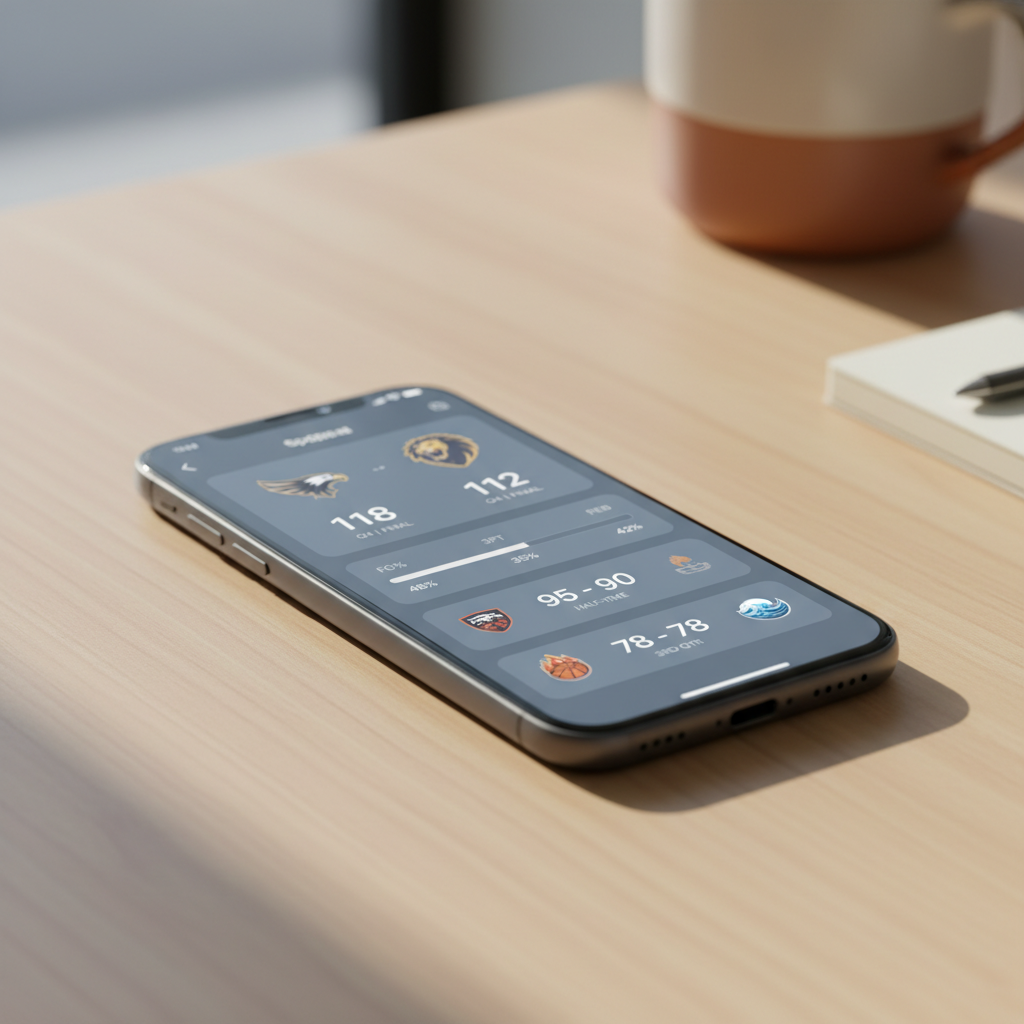
Press Sports was built around a simple editorial discipline: every piece of content must pass a signal test. If a story doesn't tell the fan what happened, what it means, or what changes next, it doesn't run. That sounds obvious, but it's a radical filter in an industry built on volume.
Here's what that looks like operationally:
- Game stories in three blocks: What happened, the key stat that explains it, and what it means for the standings or season arc.
- No debate-show content. Ever. If a take needs to be made, it's labeled as opinion and kept to 200 words.
- Structured news cards over endless scroll. Each card is a self-contained unit of meaning.
- Personalized feeds by team, player, and storyline — not just league.
- Betting and prediction content framed around data, injuries, and matchup context — never hype.
How to Build Your Own Noise-Free Sports Media Diet
You don't have to wait for the industry to fix itself. You can curate your own intake today. Here's a step-by-step approach we recommend to readers who tell us they're burned out on sports coverage but don't want to disengage from the sports they love.
- Audit your current sources. Open every sports app, channel, and feed you currently use. For each one, ask: "In the last seven days, did this source teach me something or just take my time?" Cut anything that fails.
- Unfollow debate-show clips. Algorithms feed you what you watch. Two weeks of skipping debate content will retrain your feed dramatically.
- Switch to structured sources. Replace at least one open-ended feed with a structured one — like a daily briefing or team-specific newsletter. Press Sports' daily brief is built for exactly this purpose.
- Set a time budget. Allocate 15 minutes per day for sports news. You'll be shocked how much you still know.
- Save deep dives for one weekly slot. Pick a 60-minute window — Sunday morning, Friday night — for tactical breakdowns and longer features. Keep weekdays for signal only.
Almost never. Genuinely important sports news — trades, major injuries, championship results — surfaces everywhere within hours. What you'll miss is rumor cycling, redundant coverage, and manufactured drama. Most fans who try a structured diet report feeling more informed, not less.
The Business Case: Why Signal-Only Wins Long-Term
For sports media operators, the noise-versus-signal question isn't just editorial — it's economic. The volume-and-outrage model produces short-term traffic spikes but corrodes brand trust and audience retention. Fans who feel manipulated eventually leave, and once they leave, they rarely come back.
Signal-first brands build the opposite curve: slower growth, but compounding loyalty. When a reader knows your updates are reliable and respectful of their time, they open your app first. They share your content because it makes them look smart, not outraged. They subscribe because the product is genuinely useful.
This is why we believe sports news without the noise isn't a niche position — it's the durable position. The brands that will own the next decade of sports media are the ones building for trust and retention, not for momentary engagement spikes.
A Quick Comparison: Noise vs. Signal Coverage
| Dimension | Traditional (Noise-Heavy) | Signal-Only (Press Sports) |
|---|---|---|
| Game recap length | 800–1,200 words, repeated by 5 outlets | 200 words: what, why, what's next |
| Video format | 10–22 minute debate panels | 30–90 second structured explainers |
| Headlines | Curiosity-gap clickbait | Direct, factual, scannable |
| Opinion handling | Mixed with news, not labeled | Clearly separated, labeled, short |
| Personalization | League-level homepages | Team, player, storyline feeds |
| Betting content | Hype-driven, action-focused | Data, injuries, matchup context |
What Signal-Only Coverage Looks Like Across Major Sports
Different sports demand slightly different signal structures. Here's how the noise-free philosophy adapts.
NFL
Weekly cadence means signal is about injury reports, snap counts, and playoff implications — not 24/7 quarterback debates. A noise-free NFL feed answers: who's playing, who's hurt, what changed in the playoff race?
NBA
An 82-game season demands ruthless filtering. Most regular-season games don't change the season arc. Signal-only NBA coverage highlights only games that shift seeding, reveal trends, or contain genuinely notable performances.
MLB
Baseball's daily rhythm rewards structured cards: line score, key at-bat, standings impact, next game. Long recaps are almost always noise; structured updates almost always aren't.
Soccer
Global, multi-league, and storyline-heavy. Signal-only soccer coverage means letting fans follow specific clubs and competitions, not flooding them with every league's update.
Across all of these, the Press Sports principle holds: what happened, what it means, what's next. Three blocks. Two minutes. Done.
Frequently Asked Questions
What does "sports news without the noise" actually mean?
It means sports coverage that prioritizes facts, context, and brevity over hot takes, clickbait, and repetitive debate content. The goal is to give fans everything they need to understand what happened — and why it matters — in under two minutes per story.
How is Press Sports different from ESPN or Bleacher Report?
Press Sports is built specifically around signal-only coverage: no debate shows, no clickbait, no redundant recaps. Where legacy outlets are structurally biased toward volume and engagement-driven content, Press Sports is structured around concise, contextual, mobile-first updates that respect fan time.
Will I still get deep analysis if I follow a signal-only source?
Yes. Signal-only doesn't mean shallow — it means layered. Fast facts sit on top, with deeper tactical breakdowns, features, and long-form pieces available when you opt in. The difference is that the deep content is genuinely deep, not padded to fill time.
How much time should I spend on sports news daily?
Most fans can stay fully informed on the sports they care about in 10–15 minutes per day using a signal-first source, plus one weekly 60-minute window for deeper reading. That's roughly 80% less time than the average engaged fan currently spends — without losing meaningful information.
Is sports news without the noise good for fantasy and betting?
Especially good. Fantasy and betting decisions are made on injuries, matchup data, snap counts, and probabilities — exactly the signal a noise-free source surfaces. Hype and hot takes actively hurt fantasy and betting outcomes; structured data and context help them.
The Bottom Line: Reclaiming Your Sports Experience
Sports are supposed to be fun. They're supposed to give you a break from the rest of life, not add another tab of stress and noise on top of it. Somewhere along the way, sports media forgot that — and a generation of fans is now actively looking for an alternative.
Sports news without the noise isn't a gimmick or a tagline. It's a return to first principles: tell the fan what happened, explain why it matters, and respect the limited time they have to spend with you. Brands that hold that line will earn loyalty that volume-driven media simply can't buy.
If you're ready to experience sports coverage built around clarity instead of clutter, explore what Press Sports has built. Fewer headlines. Better signal. More of the sport, less of the noise.